A Market-Basket Supper Built Around What Looks Best
Shopping for dinner is easier when you stop trying to imagine a finished recipe before you see the ingredients. At a good market or produce shop, the most useful information is right in front of you: which tomatoes smell ripe, which greens still look lively, which mushrooms are firm, and which fruit is clearly at its best.
A market-basket supper begins with that observation. Pick one or two things that look especially good, then build a meal around them with a few dependable ingredients. The result is flexible enough for an ordinary evening but still feels connected to the season and the place where you shopped.
Let the Produce Choose the Direction
Start with the ingredient you would be happy to eat with very little help. Sweet peppers might suggest roasting; crisp cucumbers may be better kept raw; new potatoes are a reason to boil and dress them while warm. If several things are equally appealing, choose produce that offers contrast—something juicy, something leafy, something that takes well to heat.
You do not need a large haul. Two vegetables and an herb can make a more coherent dinner than six unrelated purchases. The aim is to carry home ingredients you already want to taste, not ingredients that require an elaborate plan to become interesting.
Build the Plate in Three Parts
Once the produce is chosen, fill the rest of the basket with a simple framework:
- Something substantial: bread, rice, potatoes, pasta, beans, eggs, or another familiar staple.
- Something rich or creamy: olive oil, yogurt, cheese, tahini, butter, or a handful of nuts.
- Something sharp: lemon, vinegar, mustard, pickles, capers, or a punchy herb sauce.
Those three roles make an improvised meal feel complete. They also let you work with what is already in the cupboard. A basket of tomatoes and beans becomes dinner with toasted bread, olive oil, and vinegar; roasted squash can sit over yogurt with herbs and seeds; warm potatoes can become the base for greens, eggs, and a mustard dressing.
A Loose Method for Tonight’s Supper
If you want a starting point, heat the oven or a wide pan and cook the vegetable that benefits most from browning. While that cooks, prepare something fresh: sliced cucumber, torn herbs, a quick tomato salad, or leaves dressed with lemon. Warm or toast your staple, then put everything on a large plate rather than trying to assemble restaurant-style portions.
Finish by tasting for contrast. If the food feels flat, it probably needs salt or acidity. If it feels sharp, a spoonful of yogurt or a little oil may soften it. If everything has the same texture, add toasted seeds, crisp bread, or a raw vegetable. These small adjustments matter more than following a fixed sequence of steps.
Use Heat for Contrast, Not for Everything
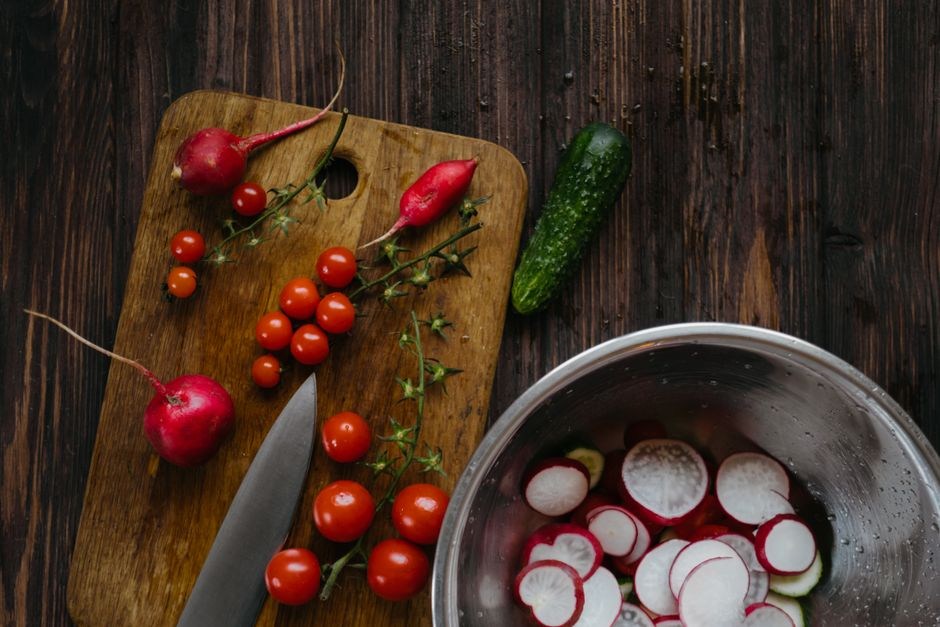
One common mistake with a basket of beautiful vegetables is cooking every item the same way. A meal becomes livelier when some ingredients stay fresh. Roast the carrots but keep the herbs raw. Sauté the mushrooms but slice the radishes at the last minute. Char the peppers and serve them beside cool beans or a lemony salad.
This approach also saves time because the whole meal does not depend on several pans finishing at once. One cooked element, one fresh element, and one ready-made staple can be enough for a generous supper.
Save the Extras With Tomorrow in Mind
When there are leftovers, store components separately if you can. Roasted vegetables are useful in an omelet or sandwich. Extra cooked grains can become lunch with herbs and a dressing. A half bunch of parsley is easier to use tomorrow if it has not already been mixed into a dressed salad.
The pleasure of a market-basket supper is that it makes shopping and cooking part of the same decision. Instead of forcing ingredients into a plan made earlier, you respond to what is good now. Over time, that small habit builds confidence: you learn which staples rescue an improvised meal and how little structure you actually need to cook something satisfying.